

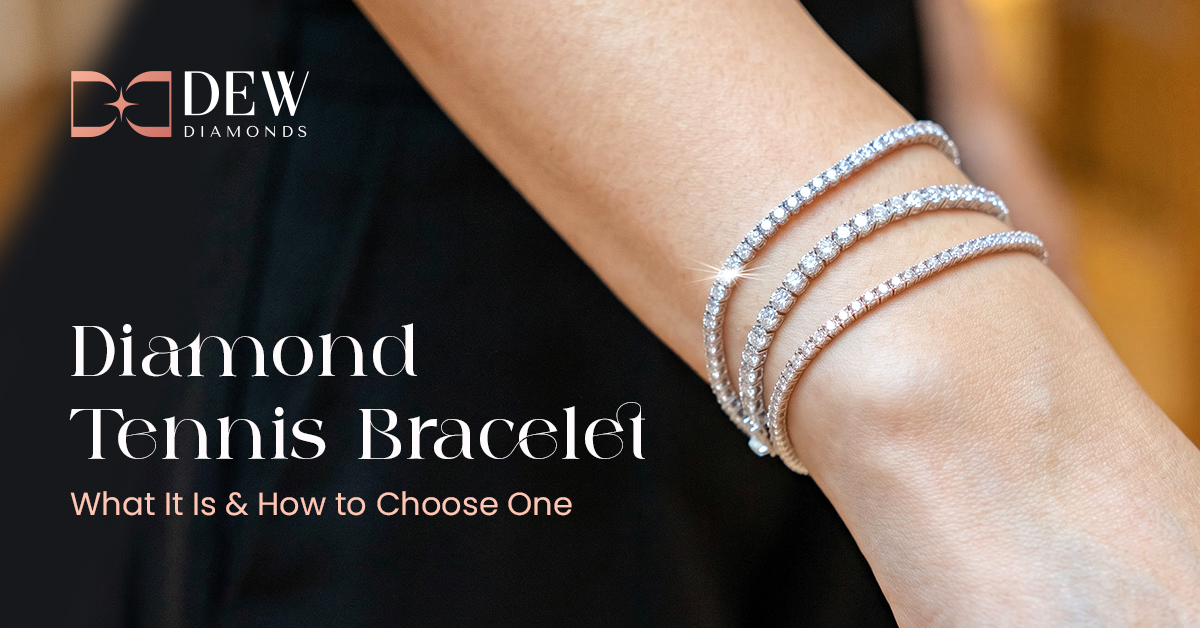
Diamond Tennis Bracelet: What It Is & How to Choose One
If you’ve ever walked into a jewellery store and spotted a bracelet that seemed to just glow from across the room, a single, seamless line of diamonds wrapping around a wrist like liquid light, there’s a good chance you were looking at a diamond tennis bracelet.
It’s one of those pieces that doesn’t shout for attention. It doesn’t need to. The tennis bracelet has been a staple of fine jewellery for decades, and unlike most trends, it hasn’t gone anywhere. If anything, it’s more popular in India today than it’s ever been, worn at weddings, gifted on anniversaries, and increasingly chosen as an everyday luxury piece by women who know exactly what they want.
But here’s the thing: despite how elegant and simple it looks on the wrist, choosing the right diamond tennis bracelet involves quite a few decisions, carat weight, setting style, clasp type, metal, fit. Get it right and you have a piece you’ll wear for decades. Get it wrong and you’ll either lose it or never reach for it.
This guide covers everything you need to know.
What Is a Diamond Tennis Bracelet?
A diamond tennis bracelet is exactly what it looks like, a flexible, single-line bracelet made entirely of matched diamonds, each stone set in its own individual link, all joined together so the bracelet bends and drapes smoothly around the wrist.
There’s no large centre stone. No pendant. No break in the line. Just one continuous row of diamonds, perfectly matched in size, colour, and brightness, running all the way around.
Because of this clean, uninterrupted design, it’s also commonly called a line bracelet or an eternity bracelet. The idea is simple, which is exactly why it works so well. There are no distractions, just diamonds.
The Story Behind the Name: Why Is It Called a Tennis Bracelet?
This is one of those jewellery origin stories that’s actually true and genuinely worth knowing.
The style existed long before it had the name “tennis bracelet.” For most of the 20th century, jewellers simply called them diamond line bracelets or eternity bracelets. Then came 1987 and the US Open.
Chris Evert, one of the greatest tennis players of her era and a well-known style icon, was wearing a delicate diamond line bracelet during her match. At some point during play, the clasp gave way and the bracelet slipped off her wrist onto the court. She famously stopped the game, stopped an actual Grand Slam match, and refused to continue until the bracelet was found.
The moment was widely covered, and from that day, the style got a new name. The tennis bracelet. And unlike most jewellery nicknames, this one stuck permanently.
The story also tells you something important about what to look for when buying one: the clasp matters more than almost anything else.
What Makes a Tennis Bracelet Different from Other Diamond Bracelets?
| Feature | Tennis Bracelet | Regular Diamond Bracelet |
| Design | Continuous single line of diamonds | Various designs with gaps or patterns |
| Diamond Count | Many small matched diamonds | Fewer, larger focal diamonds |
| Flexibility | Very flexible, drapes on wrist | Varies |
| Occasion | Daily wear + special occasions | Usually occasion-specific |
| Style | Classic, timeless | Trend-driven |
The key difference is the continuity. A regular diamond bracelet might have a centrepiece, decorative links, or sections without diamonds. A tennis bracelet has no interruptions, it’s diamonds from clasp to clasp. That’s what gives it the distinctive sparkle when you move your wrist.
Types of Diamond Tennis Bracelets
Not all tennis bracelets are identical. While the single-row classic is what most people picture, there are a few variations worth knowing about before you shop.
Single Row (Classic)
This is the original, one continuous line of round diamonds, all matched, all set in individual links. Clean, timeless, and the most versatile option. It pairs with everything from a formal saree to a casual kurta.
Double Row
Two parallel lines of diamonds running side by side. It creates a bolder, more substantial look on the wrist without requiring a single very large stone. A great choice if you want presence without going too heavy on carat weight per stone.
Halo Style
Each centre diamond is surrounded by a ring of smaller accent diamonds, making every stone appear larger. The result is a bracelet that looks much heavier and more luxurious than its carat weight suggests. Ideal for someone who wants maximum impact at a considered price point.
Fancy Shape Diamond Tennis Bracelet
While round brilliants are the classic choice, tennis bracelets are also made with oval, princess, or emerald cut diamonds. These are less common but genuinely striking, the oval cut in particular has had a major moment in India over the last two years.
Setting Styles in Tennis Bracelets
The setting is how each diamond is held in the bracelet, and it affects both how the bracelet looks and how durable it is for daily wear.
| Setting | Look | Best For |
| Prong Setting | Maximum sparkle, classic | Everyday elegance |
| Bezel Setting | Modern, clean, protective | Hard daily wear |
| Channel Setting | Sleek, smooth, snag-free | Active lifestyle |
| Shared Prong | More diamond visibility | Statement look |
Prong Setting is the most popular for a reason. The tiny metal claws that hold each diamond are minimal, so more light reaches the stone and more light bounces back out. The result is that characteristic flash you see from across the room. The trade-off is that prongs can catch on fabric over time and may need occasional checking.
Bezel Setting wraps each diamond in a thin rim of metal. It protects the stone far better than prongs and gives the bracelet a cleaner, more modern line. It’s an excellent choice if you plan to wear the bracelet every single day and don’t want to think about maintenance.
Channel Setting holds the diamonds between two continuous rails of metal, like a track. There are no prongs at all, which means the surface is completely smooth and snag-free. Slightly less light reaches each stone, but the look is sleek and contemporary.
Shared Prong, also called a U-prong, uses one pair of prongs to hold two adjacent diamonds, which means less metal and more diamond visibility. It’s a nice middle ground between the classic prong and something more modern.
How to Choose a Diamond Tennis Bracelet: Step-by-Step
Step 1: Decide on Total Carat Weight (TCW)
With a tennis bracelet, you’re not buying one diamond, you’re buying 40, 50, sometimes 70 individual diamonds. The price is based on the total carat weight, which is the combined weight of every stone in the bracelet.
For a first tennis bracelet, 2 to 3 carats TCW is the sweet spot for most buyers. It’s visible, it has real presence on the wrist, and it doesn’t tip into overwhelming territory. Lighter bracelets (1 to 2 carats) are elegant and delicate; heavier ones (5 carats and above) are genuinely bold statement pieces.
Step 2: Choose Diamond Quality (Cut, Colour, Clarity)
This is where a lot of buyers overthink it. Because the diamonds in a tennis bracelet are small and viewed from a distance, and usually in motion, you don’t need to chase the very top grades. Here’s what actually matters:
- Cut: This is the one place to not compromise. Well-cut stones reflect light properly, and in a bracelet of 50+ diamonds, even slightly dull cuts will show. Stick with Very Good or Excellent.
- Colour: G to I is the ideal range. You get near-colourless diamonds at a price that makes sense when you’re buying this many stones.
- Clarity: VS2 to SI1 is perfectly fine for a tennis bracelet. At wrist distance, you will never see inclusions in an SI1 diamond. Eye-clean is the target, not flawless.
Step 3: Pick the Right Setting Style
Think about how you’ll actually wear it. If this bracelet is going to live on your wrist most days, through work, travel, daily life, a bezel or channel setting will hold up better. If it’s primarily for occasions and you want maximum sparkle, go with prong.
Step 4: Select the Metal
This one is largely personal, but there are some practical considerations too (more on this in the metal section below).
Step 5: Get the Right Size and Fit
A tennis bracelet should move gently on your wrist. It shouldn’t be tight, but it also shouldn’t slide over your knuckles when you move your hand downward. The classic guideline is that you should be able to slip one finger between the bracelet and your wrist. Two fingers means it’s too loose; no fingers means it’s too tight.
Standard women’s lengths run from 6.5 to 7 inches; men’s typically range from 7.5 to 8.5 inches. If you’re between sizes, go slightly longer, a bracelet that’s a touch loose is far more comfortable than one that feels constricting.
Step 6: Check the Clasp
We’ll say it plainly: the clasp is the most important functional part of a tennis bracelet. Chris Evert learned that lesson in front of a global audience. Look for a box clasp with a figure-eight safety latch, this double-lock system is the gold standard for tennis bracelets and will keep your bracelet exactly where it belongs.
Diamond Quality Guide for Tennis Bracelets
| 4C Factor | Recommended Grade | Why |
| Cut | Very Good to Excellent | Maximises sparkle across all stones |
| Colour | G to I | Near colourless, great value |
| Clarity | VS2 to SI1 | Eye-clean at wrist distance |
| Carat (TCW) | 2 to 5 ct for most buyers | Balanced look and budget |
How to Choose the Right Metal
| Metal | Look | Durability | Best For |
| White Gold (18K) | Crisp, modern | High | Most popular choice |
| Yellow Gold (18K) | Warm, classic | High | Traditional Indian look |
| Rose Gold (18K) | Soft, romantic | High | Trendy, feminine style |
| Platinum | Premium, cool | Very High | Luxury and longevity |
White Gold (18K) is the most popular choice for diamond tennis bracelets worldwide, and for good reason. The cool, neutral tone complements the brilliance of white diamonds perfectly and pairs well with everything. Do note that white gold is rhodium-plated, so it may need re-plating every few years depending on wear.
Yellow Gold (18K) is the classic Indian choice and it genuinely works beautifully with a tennis bracelet. There’s something warm and rich about yellow gold with diamonds that white gold simply doesn’t replicate. If you’re pairing the bracelet with traditional outfits or other gold jewellery, yellow gold will give the most cohesive look.
Rose Gold (18K) has been having a prolonged moment in India and it suits a tennis bracelet particularly well, the blush tone adds softness to what is otherwise a very precise, structured piece. It pairs especially well with pastel and ivory outfits.
Platinum is the premium choice, denser, heavier, and more durable than gold, and it holds its colour permanently without needing re-plating. It’s the right choice if you’re buying at the higher end and want a piece that will genuinely last without maintenance.
How to Find the Right Bracelet Size
Measuring for a tennis bracelet is straightforward. Use a soft measuring tape or a strip of paper and wrap it around your wrist at the point where you’d wear the bracelet. Note the measurement in inches or centimetres, then add half an inch to three-quarters of an inch. That’s your ideal bracelet length.
The one-finger rule: Once you have a bracelet on, try to slip one finger between the bracelet and your wrist. If one finger fits comfortably, the fit is right. This gives the bracelet enough room to move and drape naturally without being loose enough to slide over your hand.
Standard sizes to keep in mind:
- Women: 6.5″ to 7.5″
- Men: 7.5″ to 8.5″
If you’re buying as a gift and aren’t sure of the recipient’s wrist size, 7 inches for women and 8 inches for men are safe starting points.
The Clasp: The Most Important Feature Nobody Talks About
Most people spend all their time choosing the diamonds and almost no time thinking about the clasp. That’s a mistake.
A tennis bracelet flexes constantly. Every time you move your wrist, type on a keyboard, reach for something, or wave your hand, that bracelet is bending and shifting. The clasp takes the brunt of all that movement.
Here’s what to look for:
Box Clasp: A small metal box with a tongue that clicks into place. Secure and reliable when well-made.
Figure-Eight Safety Latch: An additional folded metal piece that flips over the box clasp and locks it a second time. This is the safety net, if the primary clasp somehow works loose, the figure-eight catches it.
Tongue and Box Clasp: A simpler version of the box clasp, common on lighter bracelets. Fine for occasional wear, but ideally you want the safety latch in addition.
When you’re evaluating a bracelet, physically open and close the clasp a few times. It should feel solid and click firmly into place without any wobble or play. A clasp that feels flimsy when the bracelet is new will only get worse over time.
Natural Diamond vs Lab Grown Diamond Tennis Bracelet: Which to Choose?
This is a question worth addressing directly because it genuinely affects what you can buy at any given budget.
A lab grown diamond is a real diamond, same chemical composition, same hardness, same optical properties. The only difference is where it came from. And when it comes to tennis bracelets, lab grown diamonds offer a meaningful advantage: because you’re buying 40 to 70 stones at once, the cost difference between natural and lab grown adds up significantly.
In practical terms, the same budget that buys a 2 carat natural diamond tennis bracelet might get you a 3.5 to 4 carat lab grown version. Same quality grades, same certifications, visibly more sparkle on the wrist.
If resale value is a priority for you, natural diamonds hold their value better. If wearability, visual impact, and making your budget stretch further matters more, and for most buyers it does, lab grown is worth serious consideration.
Diamond Tennis Bracelet Price in India: What to Expect
Prices vary widely depending on carat weight, diamond quality, metal, and whether the diamonds are natural or lab grown. As a general guide for the Indian market:
- 1 to 2 carat TCW (natural diamonds): Rs. 80,000 to Rs. 2,50,000
- 2 to 3 carat TCW (natural diamonds): Rs. 2,50,000 to Rs. 5,00,000
- 3 to 5 carat TCW (natural diamonds): Rs. 5,00,000 and above
- Lab grown diamond options: Typically 40 to 60% lower than natural at equivalent grades
Always ask for an IGI or GIA certificate for the diamonds in the bracelet. A certified tennis bracelet gives you verified quality and makes the piece much easier to insure or resell.
Can You Wear a Diamond Tennis Bracelet Every Day?
Yes, and honestly, that’s what they’re designed for. A well-made tennis bracelet with a secure clasp and a protective setting (bezel or channel in particular) can handle daily life without issue.
That said, a little common sense goes a long way:
- Take it off before swimming. Chlorine can damage metal settings over time, and cold water can make your wrist temporarily smaller, which increases the risk of it slipping off.
- Remove it before heavy manual work or the gym. This is less about the diamonds and more about protecting the clasp.
- Don’t sleep in it regularly. The bracelet will flex and bend throughout the night, which adds unnecessary stress to the setting and clasp over years of wear.
Other than those situations, wear it as much as you like. That’s the whole point.
How to Care for Your Diamond Tennis Bracelet
Diamonds may be the hardest natural material on earth, but the gold or platinum settings around them need a little attention.
Cleaning at home: Mix a small amount of mild dish soap with warm water. Soak the bracelet for 20 to 30 minutes, then use a soft toothbrush to gently scrub around each stone and setting. Rinse thoroughly with clean water and pat dry with a lint-free cloth. Do this once a month and your bracelet will stay brilliant.
Professional cleaning: Take it to a jeweller once a year for an ultrasonic clean and a check of all the prongs and clasps. This is especially important for prong-set bracelets where individual claws can loosen with wear.
Storage: Keep it in a separate soft pouch or compartment in your jewellery box. Diamonds can scratch other gemstones and even other metals, so storing pieces together without protection is a habit worth breaking.
Checklist Before Buying a Diamond Tennis Bracelet
- Total carat weight confirmed and matches what you’re looking for
- Diamond cut grade is Very Good or Excellent
- Colour grade is between D and I
- Clarity grade is VS2 or better (SI1 acceptable for budget-conscious buyers)
- Setting style chosen based on intended wear (daily vs occasional)
- Metal type selected and confirmed as 18K gold or platinum
- Bracelet length measured and confirmed against your wrist size
- Clasp tested, box clasp with figure-eight safety latch present
- IGI, GIA, or SGL certificate included with purchase
- Hallmark on metal confirmed
- Return and exchange policy understood before purchase
Conclusion
A diamond tennis bracelet is one of those rare jewellery purchases that genuinely earns its place in a collection and stays there. It doesn’t date, it doesn’t demand a specific outfit, and it works as well on a Tuesday morning at the office as it does at a wedding reception on a Saturday night.
The key to getting it right is knowing what you’re looking for before you walk into a store. Now you do. Take your time with the carat weight, choose a setting that matches how you’ll actually wear it, and don’t skip the clasp check.
And if you’re still not sure where to start, a classic 2 to 3 carat round brilliant, prong set in 18K white or yellow gold, with a box clasp and safety latch, that’s a piece that will never let you down.