

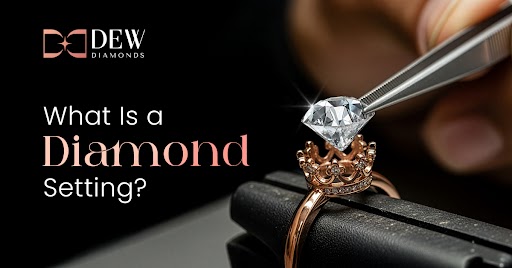
What Is a Diamond Setting?
Well, have you ever been to a jewellery shop to find a diamond ring? You might adore the gemstone itself and be amazed. However, there is a secret that makes the diamond shine the way it does. Yes, we are talking about the setting, which is just as important as the diamond.
The setting not only holds the diamond in its place. Instead, it decides how the diamond looks. It can also impact the durability of your diamond and affect your overall satisfaction with the ring.
This blog is an attempt at helping you understand the different settings for a diamond.
What is a diamond setting?
A diamond setting is the metal framework that holds your precious stone securely and displays it beautifully. You can consider it to be the foundation on which your ring or diamond jewellery stands.
The setting has multiple functions to perform. It protects your diamond from damage, influences how light enters and exits the stone (affecting sparkle), determines how your diamond looks to the eye, and contributes significantly to the ring’s overall aesthetic appeal.
There are several setting designs, and each has its own advantages. Some settings may show the diamond with minimal interference. Some others may add small diamonds or gemstones to improve the overall look.
The Most Popular Diamond Setting Types
Here is the best diamond setting chart that you would find quite commonly on many of the jewelleries you witness.
Prong setting
The setting is commonly used in engagement rings. This classic design uses typically four, five, or six metal prongs that hold the diamond. Each of these prongs has a small cup-like structure that is used to hold the girdle of the diamond.
Why is it loved?
The prong setting lets the light flow into the diamond from different angles. That would mean your diamond can show off in all its glory. The setting also makes the diamond appear larger than it actually is. If you want to have a maximum visual impact, this should be the right setting.
The Downsides
The exposed prongs can get caught up in the clothing. A prong may also become loose or get damaged over time. The diamond is exposed in this setting and can make the gemstone vulnerable to scratches and chips.
Bezel setting
The bezel settings are considered to be the modern alternative to the classic prong setting. In it, a continuous metal rim encircles the diamond. The bezel design holds the diamond and embraces it securely. You have a smooth and protective barrier all through the diamond.
Why do people choose it
Besel setting offers the best protection for the diamond. It shields the diamond from bumps, scratches, and potential damage. If you have an active lifestyle, this setting should be the perfect one for you. The protection and refined design make it stand out.
The downside
The bezel setting exposes less light than the prong settings. That can reduce the brilliance of the stone. However, given the added protection, this is something most enthusiasts ignore.
Pavé Setting
The word means paved in French. That should give you an idea on how the setting looks. In this setting, multiple small diamonds are placed closely together across the band or around accent areas. The diamond is held by tiny beads of metal.
What makes it stunning
The setting creates a continuous sparkle. This setting helps the diamond to get light from all angles. The band seems to glow with hundreds of tiny diamond facets. It creates drama and maximizes overall sparkle and light reflection across the entire ring.
Things to know
Pave settings may need more care as they attract dust and oils. The setting is also more delicate than some alternatives. It should be the best option for those who may not have an active lifestyle.
Channel setting
It can be equivalent to a sophisticated grooved pathway used for diamonds. In this design, diamonds are nested into a carved channel along the band, with metal walls on either side holding them secure. Precision hammering techniques are used for this setting.
What makes it the best choice
The stones are protected from multiple sides. That should make the setting stand out when it comes to protection. It creates a sleek, streamlined look that works beautifully for eternity bands or three-stone engagement rings.
The design is best suited for those looking for a secure setting for multiple diamonds without the visibility of individual prongs. This setting offers a clean, modern aesthetic.
Halo setting
A halo setting surrounds your center diamond with a circle of smaller diamonds or gemstones. The halo acts like a sparkling crown around your main stone, enhancing its prominence and creating a stunning visual effect.
What makes it stunning
The surrounding diamonds make the central diamond look larger. It can be an excellent choice if you need a look of a larger diamond and lower carat weight. The smaller stones also amplify the overall sparkle and create a more eye-catching design.
The downside
The attention is shared between the surrounding diamonds and the central one. That can make the central diamond less attractive. The setting also requires more careful maintenance because multiple stones need to stay secure.
Less Common Diamond Setting Styles
Apart from the most common settings outlined above, you can also check out a few less common styles.
Tension setting
This is one of the cutting edge designs observed in modern jewelleries. In fact, it is a new design style. In this setting, the shank of the ring is engineered to exert significant pressure—between 65 to 95 pounds of force—on the diamond’s girdle, holding it securely in place through the metal’s natural springiness or tension.
Why is it impressive
You get an attractive, striking, contemporary look that feels almost futuristic. It has a minimal metal exposure. That would mean your diamond gets a maximum visibility. Moreover, the setting is extremely secure.
A few important notes
Tension settings require diamonds with a hardness level of 9 or above on the Mohs scale. You can not use this setting for the softer diamonds. The setting also incurs high cost due to expert craftsmanship required.
Bar setting
The setting is almost similar to channel setting. It places diamonds between parallel metal bars. The stones nestle into grooves carved into each bar, and then metal is hammered and overlapped to secure them in place.
What makes it look great
Bar settings create a modern, geometric look. Like tension settings, bar settings also require diamonds with a Mohs hardness of 9 or above.
The design is perfect for multi-stone designs where you want a contemporary, architectural appearance with excellent stone protections.
Flush setting
The flush setting is also called Gypsy setting. It places the diamond directly into a hole drilled into the metal band, with the crown (top) of the diamond being the only part that protrudes above the band surface.
What makes it look great
This creates a modern, minimalist aesthetic that’s both contemporary and distinctive. Flush settings work beautifully for those who prefer subtle sophistication over obvious sparkle.
Things to consider
This setting exposes less of the diamond than most other styles, which can reduce visible brilliance, and it may require occasional adjustment or re-securing over time.
How to Choose the Right Diamond Setting?
Of course, choosing a setting is deeply personal in nature. However, there are a few factors that would make a difference.
- Your lifestyle – If you have an active lifestyle or are into sports, you need to have a protective setting. Bezel, channel and tension settings should be the perfect options in this context. These settings protect the diamonds from external impact.
- Your aesthetic preferences – Do you prefer modern designs or a traditional look? Prong and halo settings appeal to those who love classic romance and maximum brilliance. Bezel and flush settings attract those with contemporary sensibilities.
- Your budget – A prong design costs significantly lower than the more design-centric settings. Your choice should depend on how much you are willing to spend.
- Shape of the diamond – Round diamonds look great in any design. Oval and cushion-cut diamonds pair beautifully with halos and solitaire settings. We will cover more on that in the next section.
Diamond Setting Types by Diamond Shape
The shape of the diamond is one prime factor that decides the settings that would look great on it.
- Round brilliant: The most versatile shape that looks phenomenal in any setting—prong, bezel, halo, tension, or solitaire. Round diamonds’ smooth edges make them ideal for even delicate settings.
- Oval: Pair beautifully with solitaire prong settings, halos, and three-stone designs. The elongated shape flatters the hand and creates the illusion of a larger diamond. In 2026, ovals are the most popular diamond shape for engagement rings.
- Cushion: These romantic, pillow-shaped diamonds look stunning with halos that emphasize their geometric beauty, or in classic solitaire prong settings. Note that cushion cuts typically appear slightly smaller than round diamonds of the same carat weight, so a halo can help enhance their apparent size.
- Emerald and asscher: Angular shapes with step facets pair beautifully with bezel settings that protect their large facets, or in channel settings that complement their geometric precision.
- Princess and marquise: These pointed shapes benefit from protective settings like bezel or solitaire prongs, as the sharp edges are more vulnerable to chipping during daily wear.
Pros and Cons of different Diamond settings
The comparison table here should give you a clear idea on the pros and cons of different diamond settings.
FAQs
Which diamond setting is most secure?
Tension setting offers the most secure protection for the diamond. Bezel and channel settings are excellent alternatives, as the metal surrounding the stone provides comprehensive protection. However, the prong settings are the least secure.
Which setting makes a diamond look bigger?
Halo settings create the most dramatic size-enlarging effect. Bezel settings also create the illusion of a larger diamond. A higher setting placement also makes diamonds appear larger.
Are pave settings durable?
Pavé settings are reasonably durable for regular wear. However, they require extreme care. For extremely active lifestyles, more protective settings like bezel or channel are better choices.
What is the best setting for daily wear?
Bezel and channel settings offer the optimal combination of protection and practicality for daily wear. Tension settings are also excellent for active individuals, though they require expert jeweler care.